Stillness Health · Andreia Ferreira
Self-Lymphatic Drainage
Head & Neck
A guide for clients receiving manual lymphatic drainage treatment
Before you begin
Important — when not to massage
Do not carry out self-massage if you have an active infection in your head or neck. Signs of infection include:
- Swelling with redness of the skin, which may spread quickly
- Pain in the head and/or neck
- Tenderness or warmth in the area
- Fever, chills, or feeling generally unwell
If you notice any of these signs, please seek medical attention rather than continuing with massage. Contact your GP, a walk-in centre, urgent care, an emergency department, or NHS 111.
Also avoid self-massage if any of the movements are causing you pain, or if you are straining your shoulders, neck, arm or hand to complete them.
Your lymphatic system
Your lymphatic system plays a vital role in your overall health. It removes excess fluid and waste from the body’s tissues and is central to immune function. It consists of a network of lymph nodes connected by lymph vessels, with large clusters of nodes found in the neck, underarms and groin.
When the flow of lymphatic fluid is disrupted, fluid can accumulate in the tissues, a condition known as lymphoedema. The diagram below shows the normal direction of lymphatic flow in the head and neck.
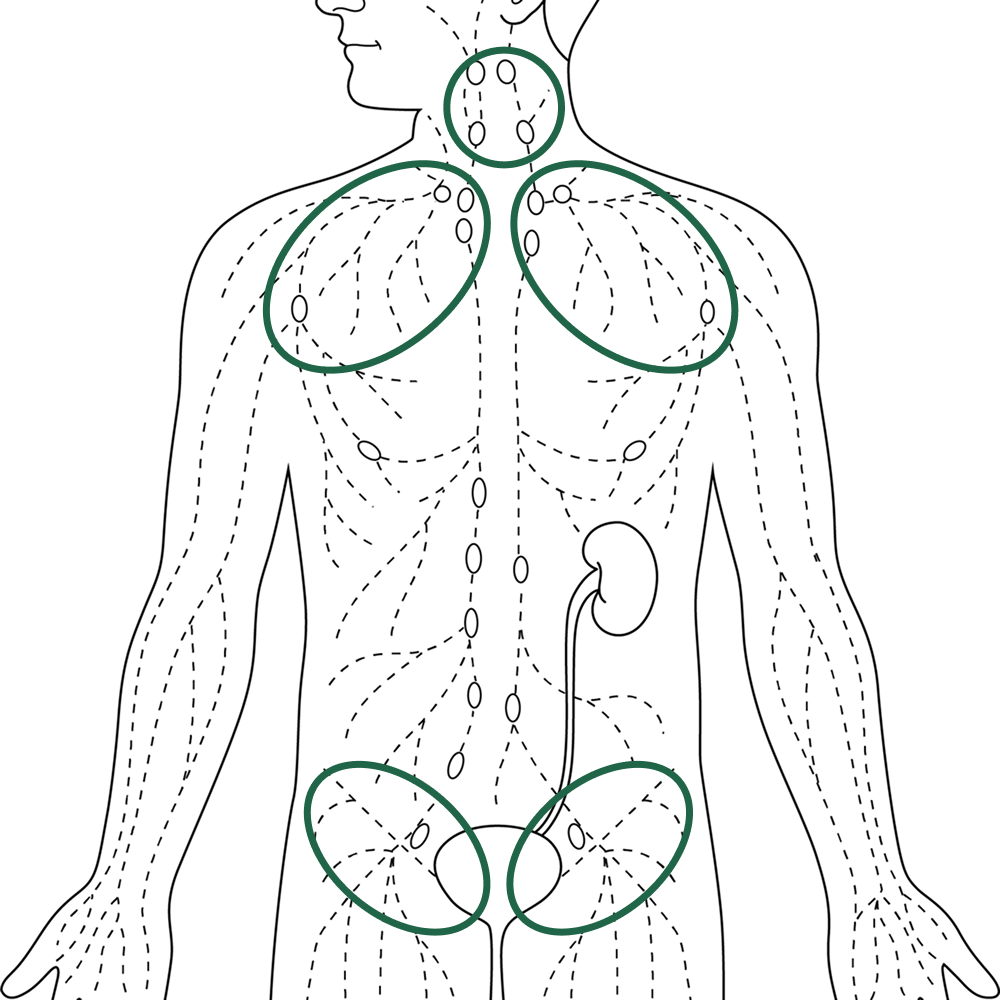
Major lymph node clusters of the body
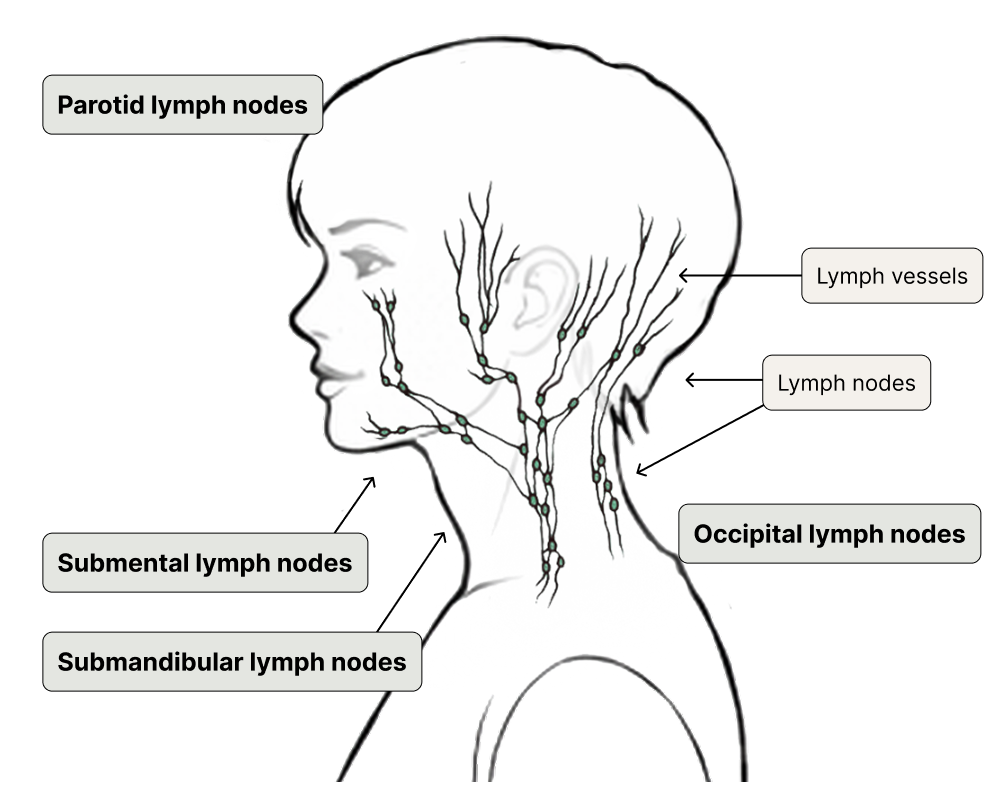
Lymph nodes of the head and neck
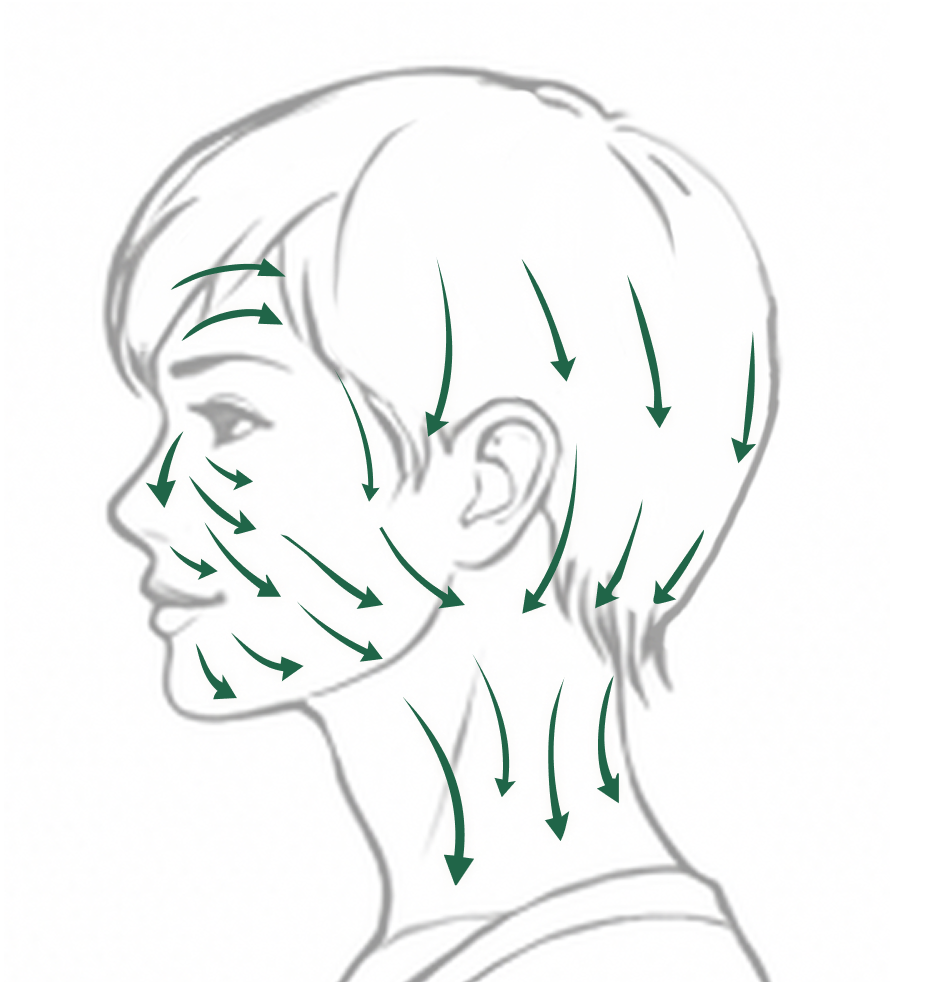
Normal lymphatic flow in the head and neck
How self-lymphatic drainage helps
Self-lymphatic drainage (SLD) is a gentle, specialised form of massage designed to encourage lymphatic fluid to move away from areas of swelling, or those at risk of swelling, and toward regions where the lymph nodes are functioning well. It works through light, rhythmic movements that stimulate the contraction of the lymphatic vessels.
It is not the same as conventional massage. The techniques are specific, and the pressure used is intentionally very light.
Technique: what to keep in mind
- Pressure should be very light. Your touch should gently stretch the skin to its natural limit, then release. If you can feel the muscles beneath your fingers, you are pressing too firmly.
- Use the flat of your hands rather than your fingertips, to maximise skin contact and stimulate the lymph vessels more effectively.
- Always work toward unaffected areas of the body, following the natural direction of lymphatic flow.
- Warm muscles respond better. Try to carry out your massage when you are comfortably warm.
- Find a position that works for you, seated, standing or lying down, whichever is most comfortable.
- Daily practice is ideal. A short daily session is more beneficial than longer, less frequent ones.
- If working on both sides, complete all steps on one side before repeating on the other.
Some people find it easiest to build self-massage into an existing routine, in the evening while relaxing, for example. Consistency matters more than duration.
The sequence
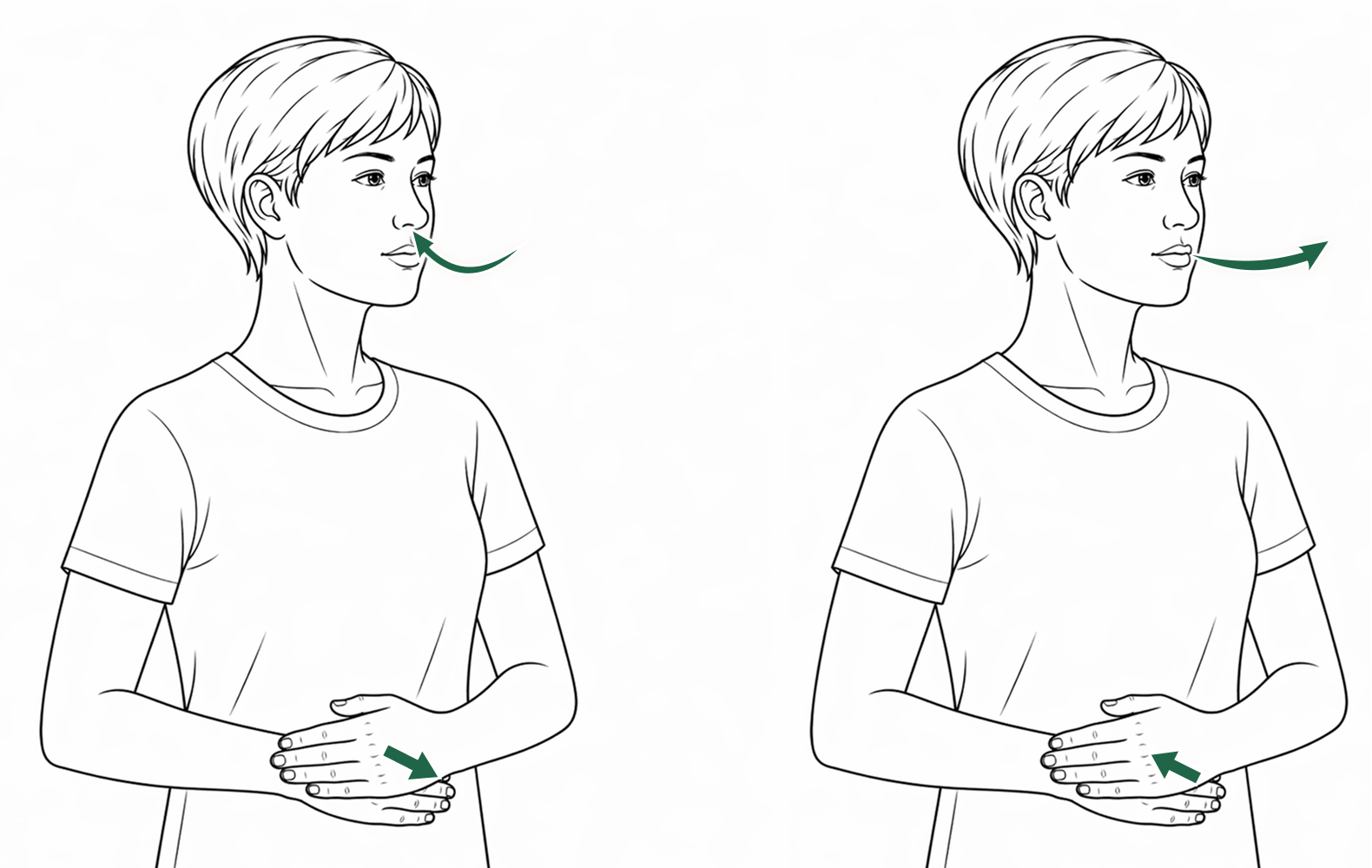
Deep breathing
Deep breathing is one of the most effective ways to stimulate lymphatic flow throughout the whole body, and it is the best place to begin every session.
- Place the palms of your hands on your stomach
- Breathe in slowly and deeply through your nose, allowing your stomach to rise
- Breathe out slowly through pursed lips, letting your stomach fall
- Repeat 5 times, pausing briefly between each breath to avoid dizziness
Preparing your lymph nodes
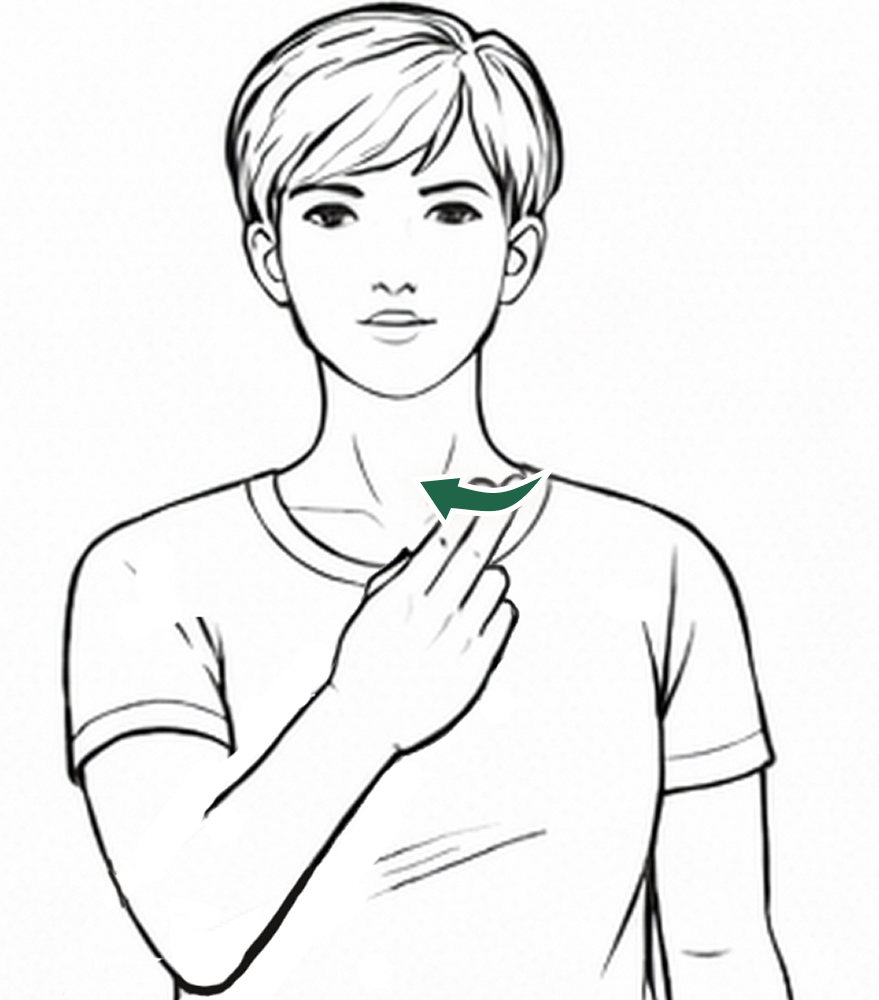
This step activates the lymph nodes just above your collarbone and in your underarms, preparing them to receive fluid from your face and neck during the massage that follows.
Collarbone nodes — repeat 15 times
- Place the flat of your second and third fingers on either side of your neck, just above the collarbone. Shrug your shoulders briefly, you should feel a small dip in the skin. That is the correct position.
- Using a gentle “J”-shaped stroke on each side, massage downward and inward toward the collarbone. Keep your fingers above the collarbone at all times.
- Gently stretch the skin to its natural limit, then release.
You may massage one side at a time, or both sides simultaneously, crossing your hands if needed.
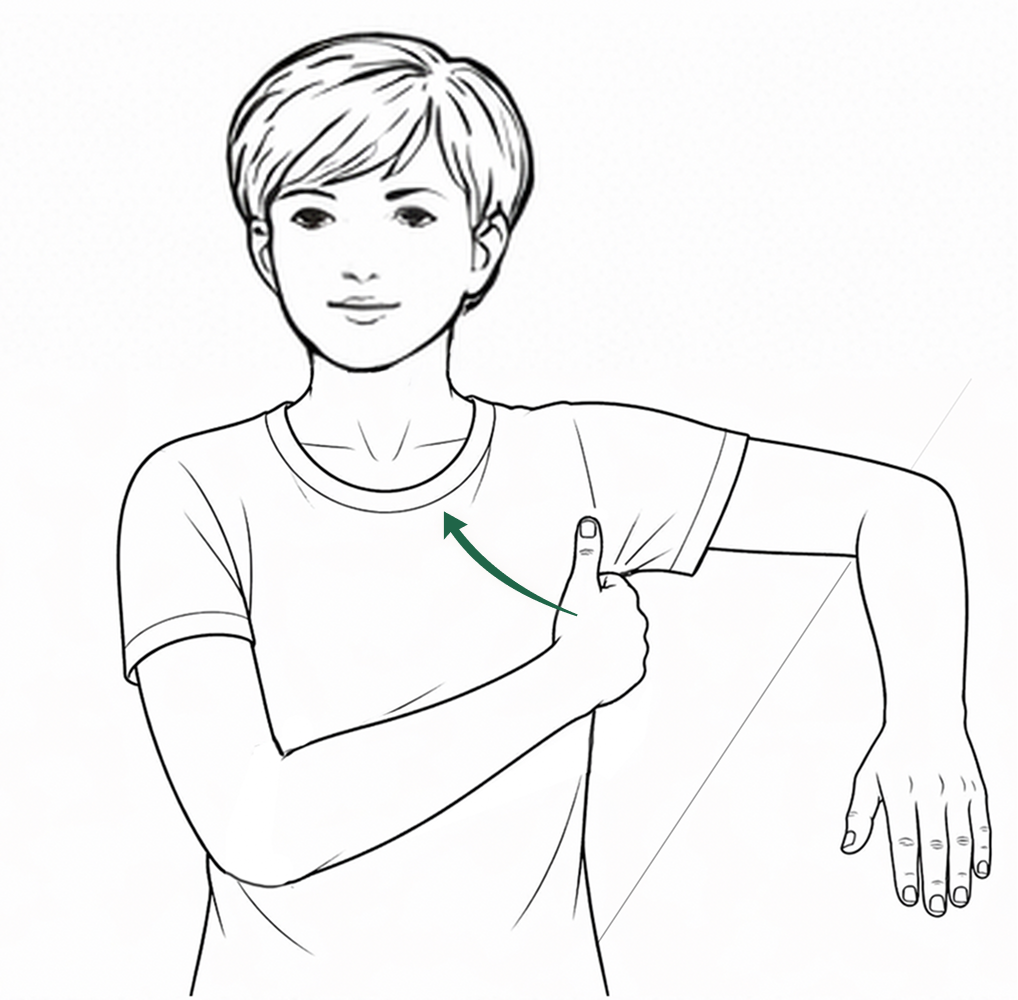
Underarm nodes — repeat 10–15 times each side
- Place your palm against your underarm, with your arm in a comfortable, slightly elevated position
- Gently pull upward and inward toward your body, then release
- Repeat on the other side
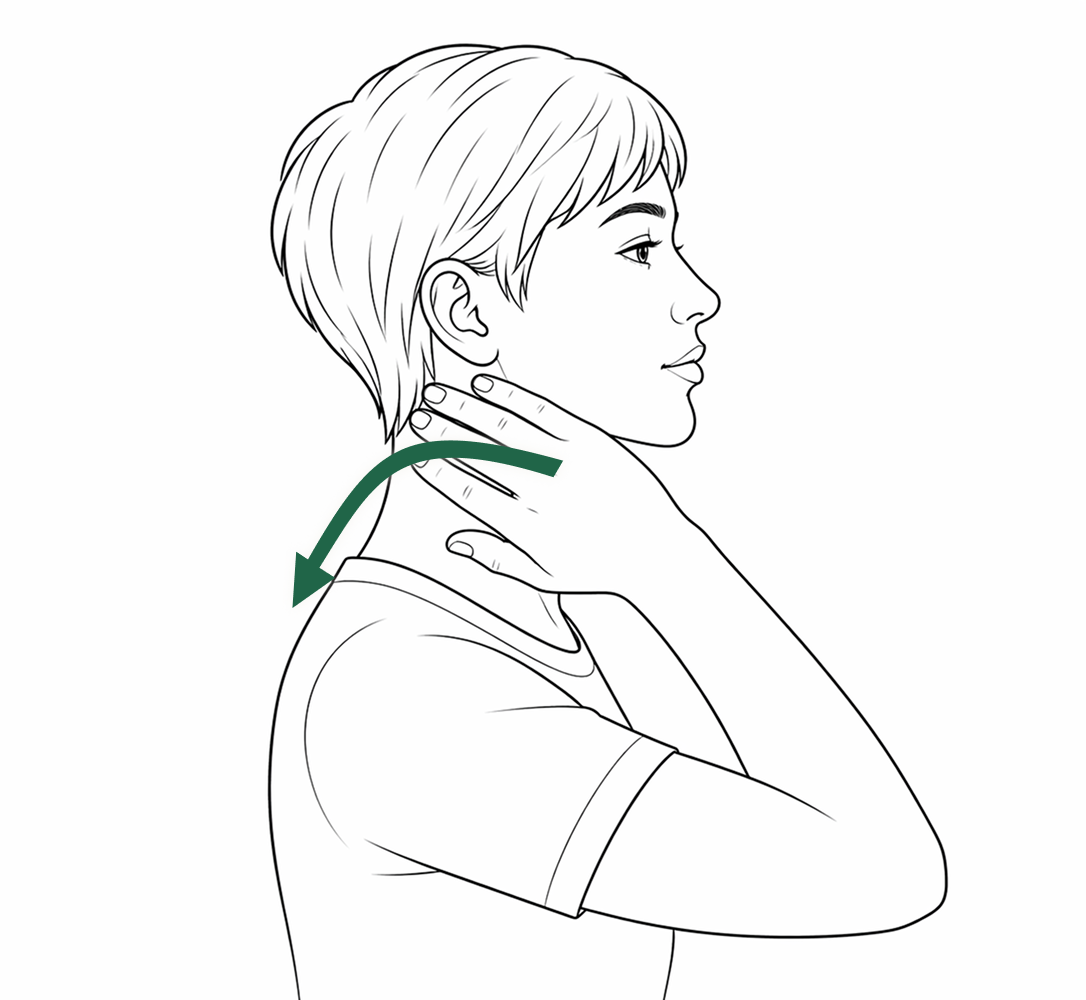
Side of the neck
- Place your flat hands on either side of your neck, just below your ears
- Gently stretch the skin backward, away from your face, and downward, then release
- Work slowly and rhythmically
Keep your pressure light throughout.
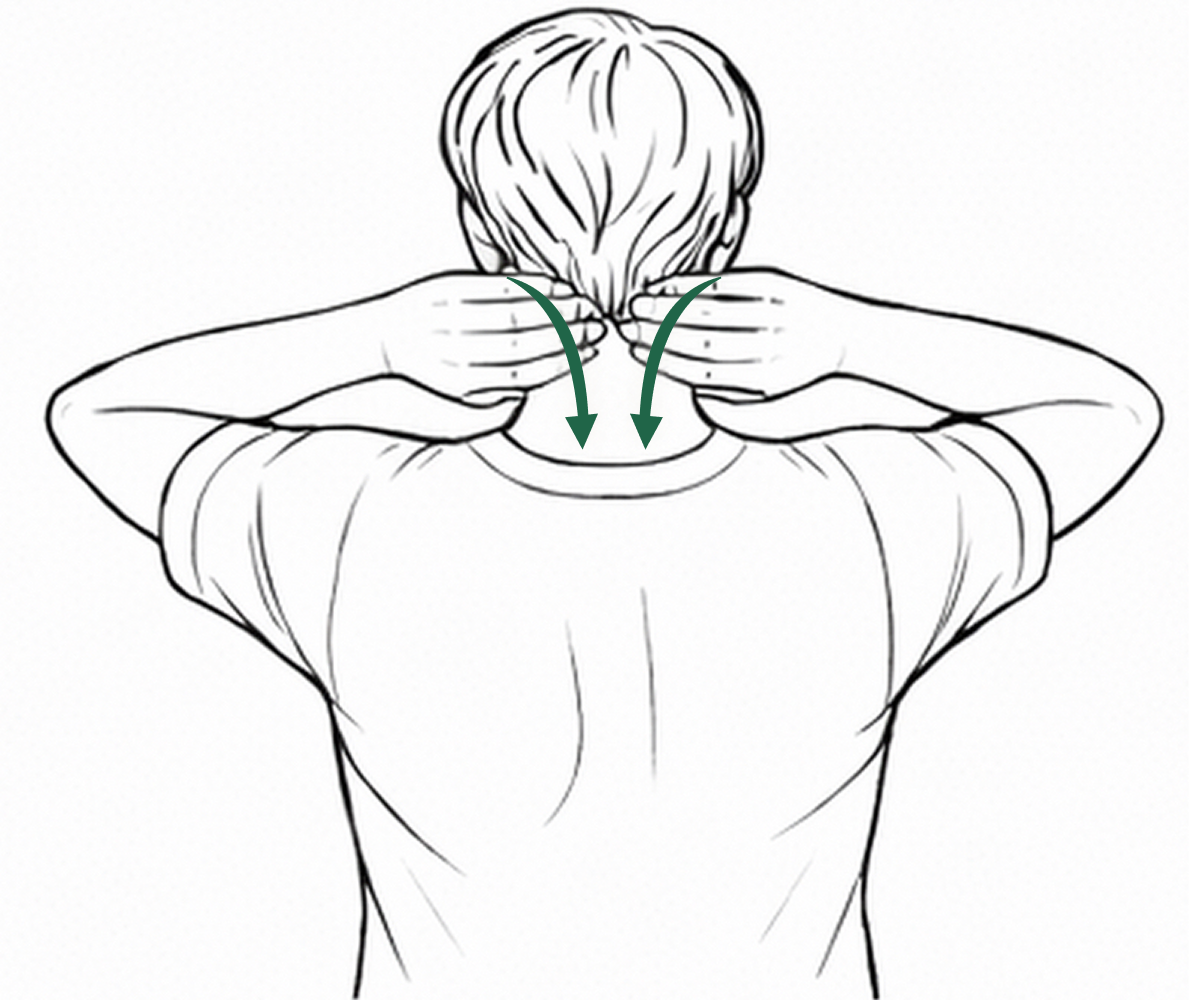
Back of the neck
- Place your flat hands on the back of your neck, just below the hairline, on either side of the spine
- Stretch the skin toward the spine and then down toward the base of the neck, then release
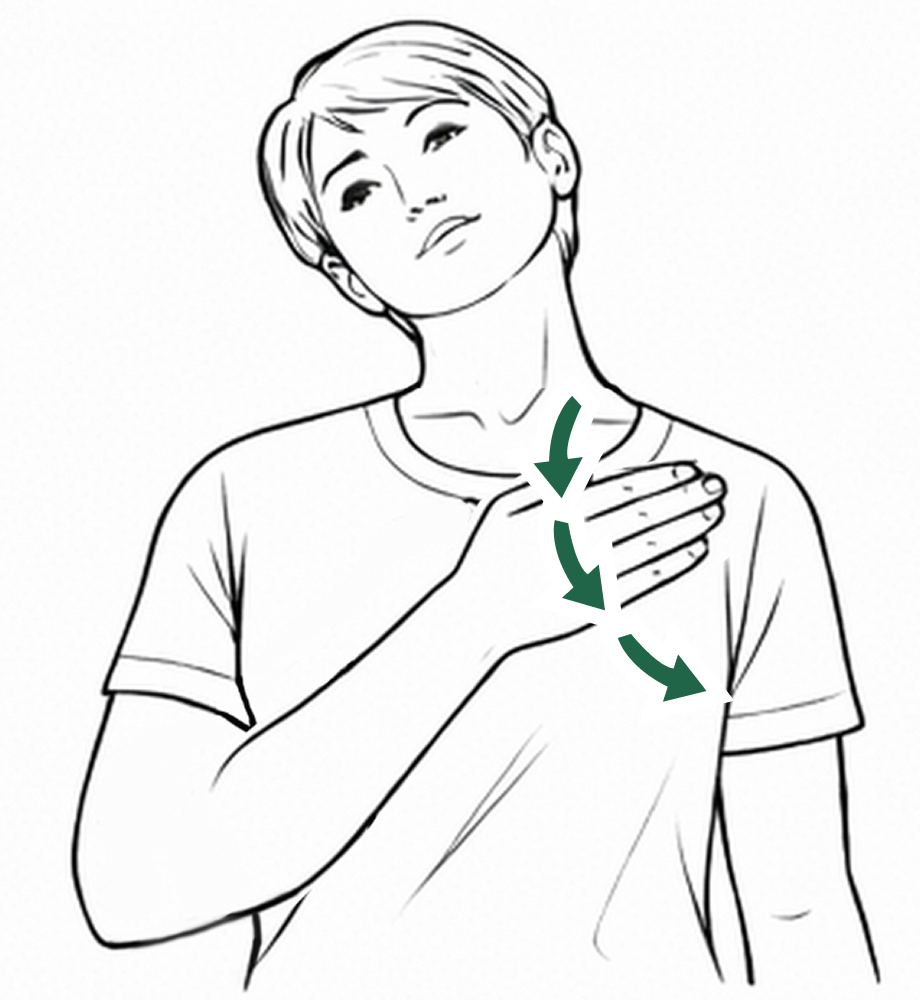
Upper chest
This step moves lymphatic fluid from the neck and chest toward the underarm nodes.
- Place your hand on your collarbone and move it downward toward your underarm
- Gently stretch the skin downward and toward the underarm, then release
Face
Work through each area in sequence, keeping your touch light and your movements slow. Each stroke should finish in front of your ears, directing fluid toward the peri-auricular lymph nodes.
Lips and cheeks
Stroke above and below your lips, sweeping outward toward your ears. Then stroke from the bridge of your nose outward across your cheeks, finishing in front of your ears.
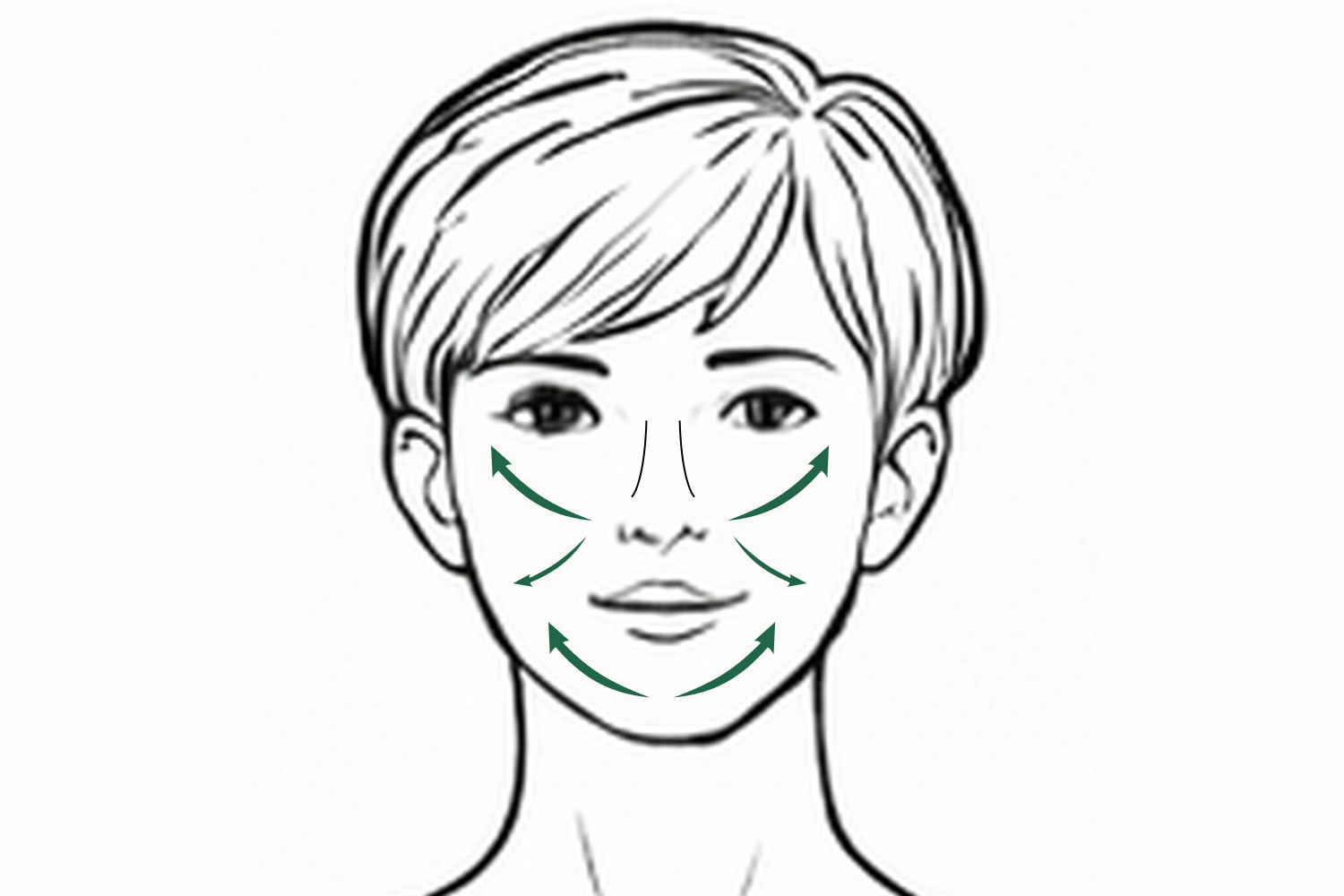
Lip and cheek strokes
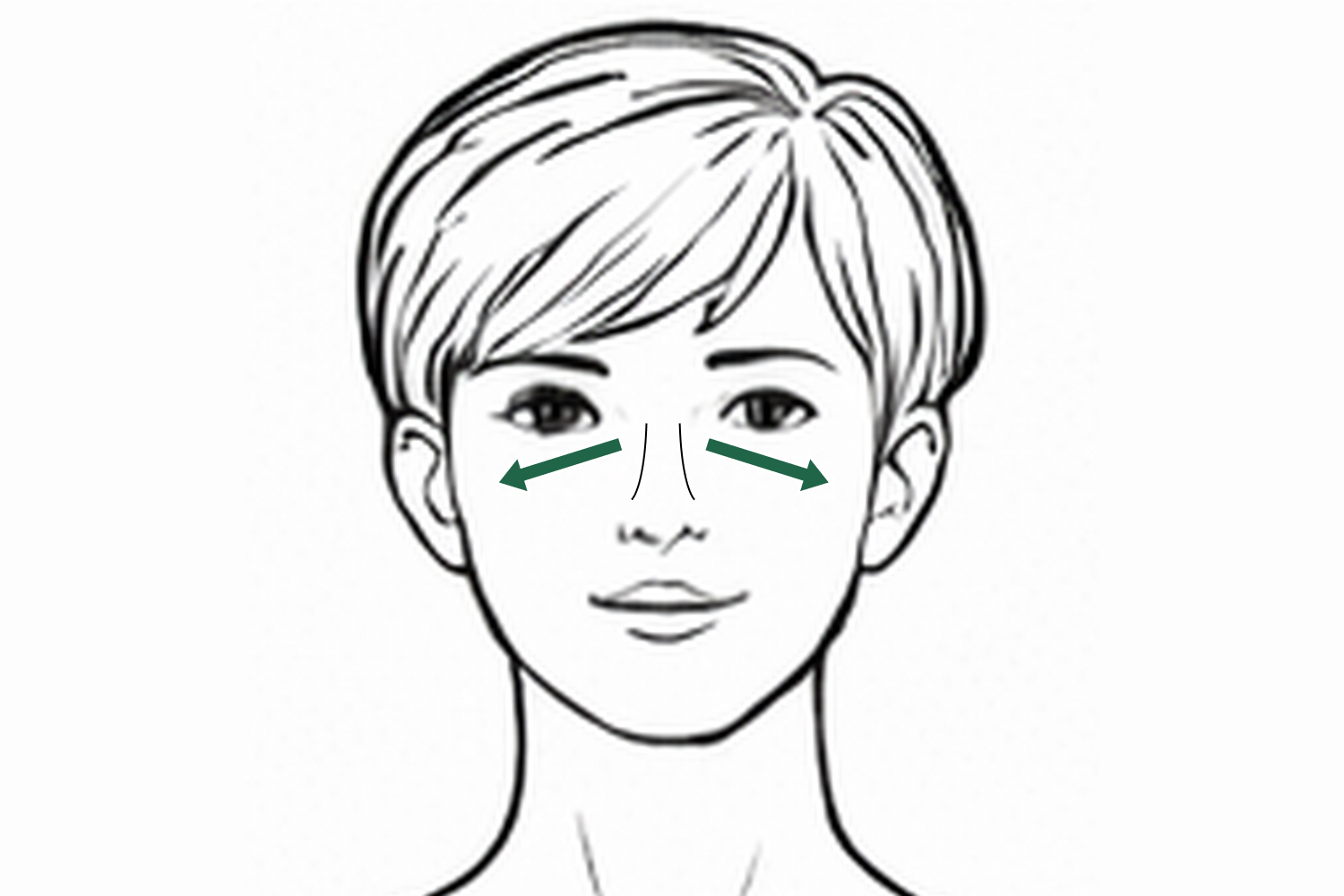
Bridge of nose outward
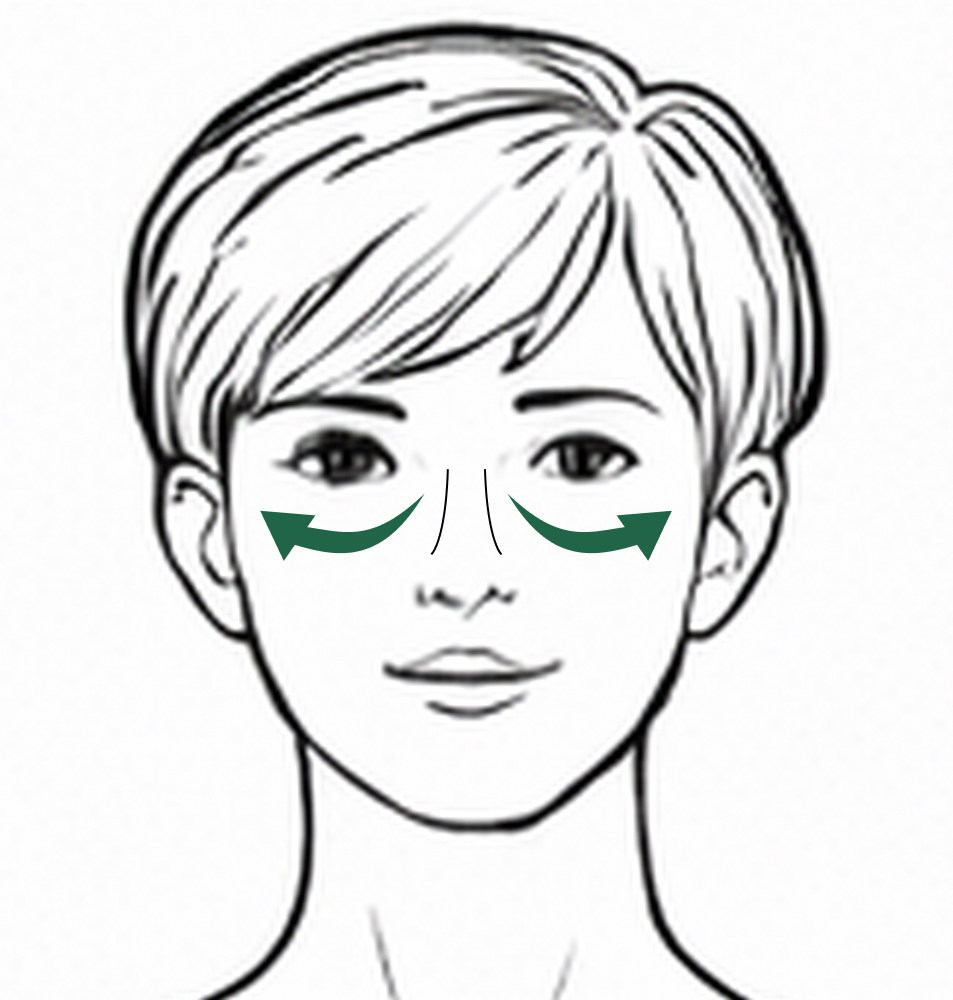
Under the eyes
Working upward from the nose toward the eyes, use a lighter touch. Continue stroking outward, being especially gentle around the eye area.
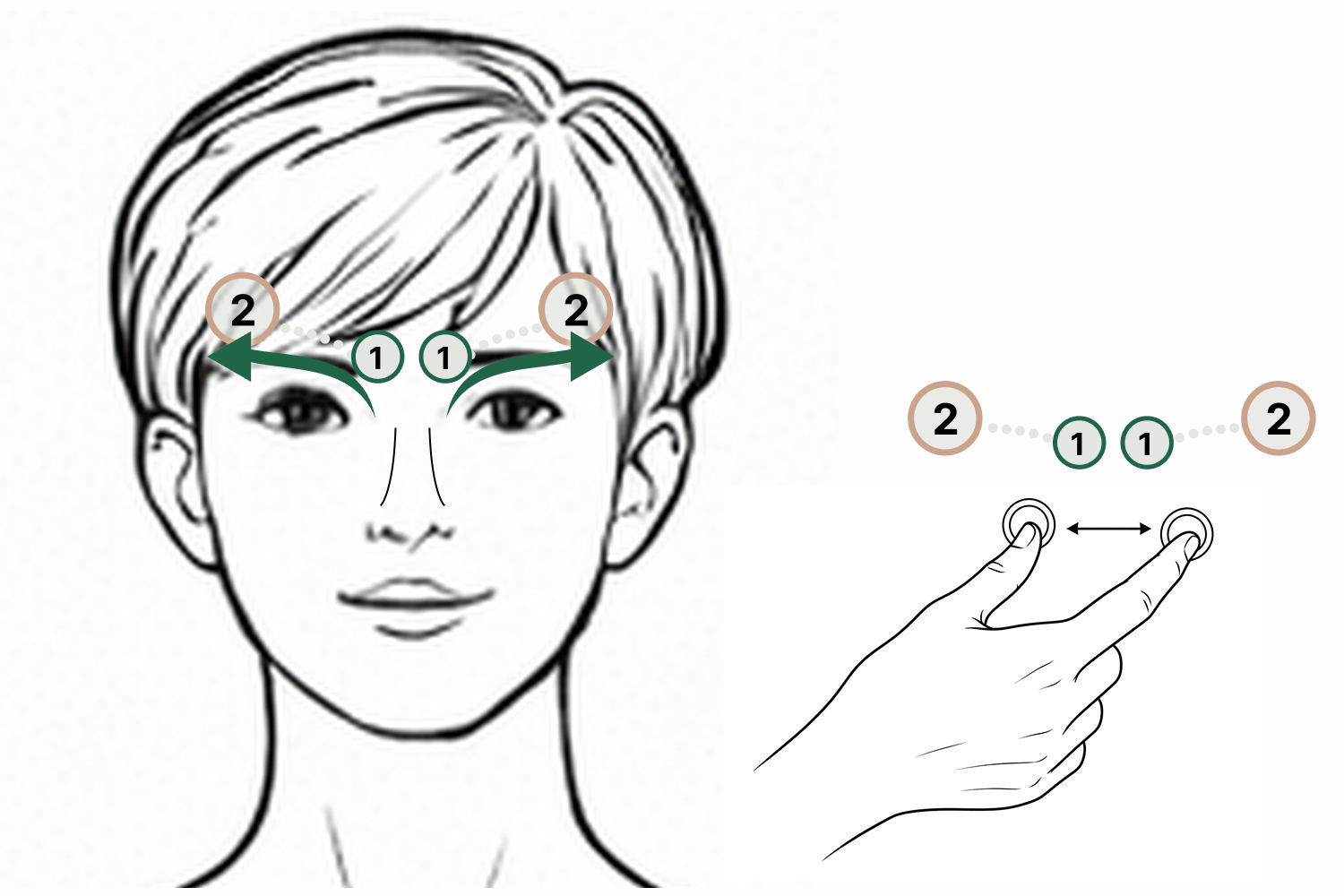
Eyebrows — peri-auricular drainage
Lightly pinch along your eyebrows, starting from the inner brow and moving to the outer brow, directing fluid toward the peri-auricular nodes in front of your ears.
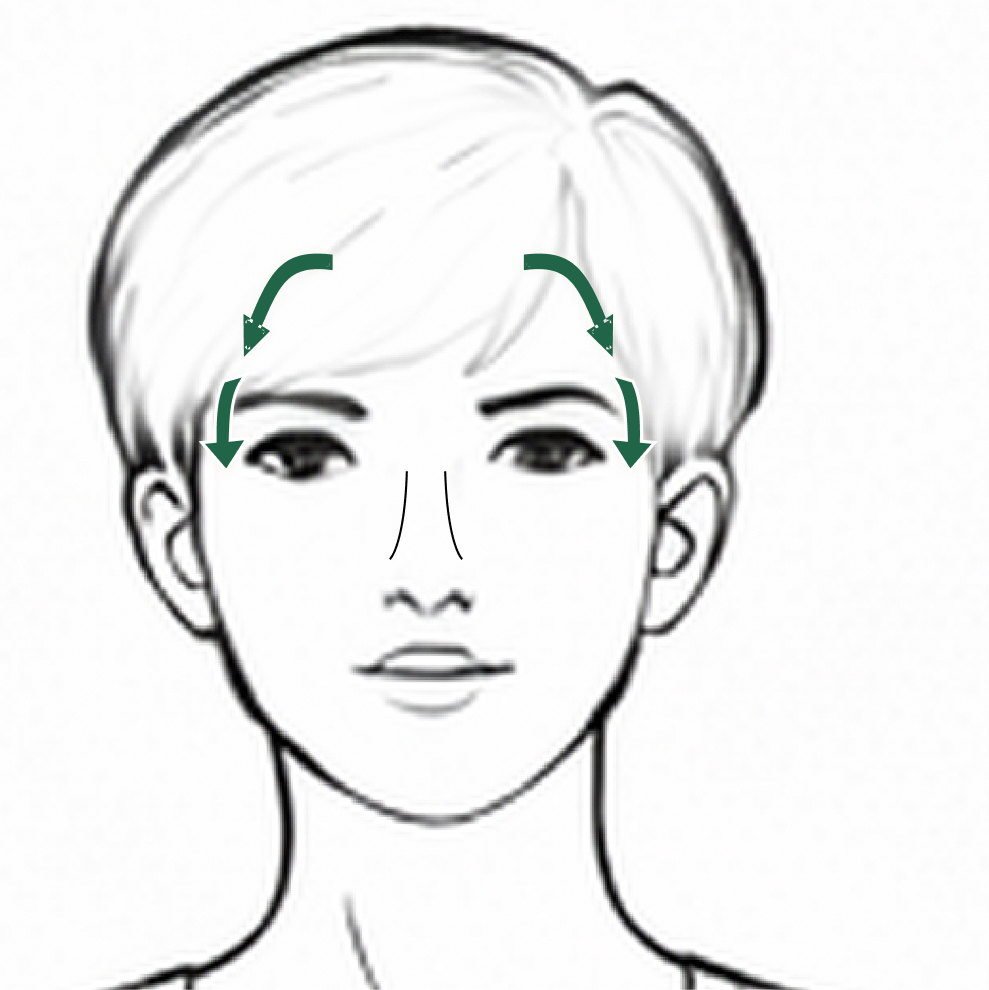
Forehead
Stretch the skin from the outer forehead downward toward the hairline and in front of your ears.
Back of the head
- Gently stretch the skin from the outer back of the head downward toward the neck
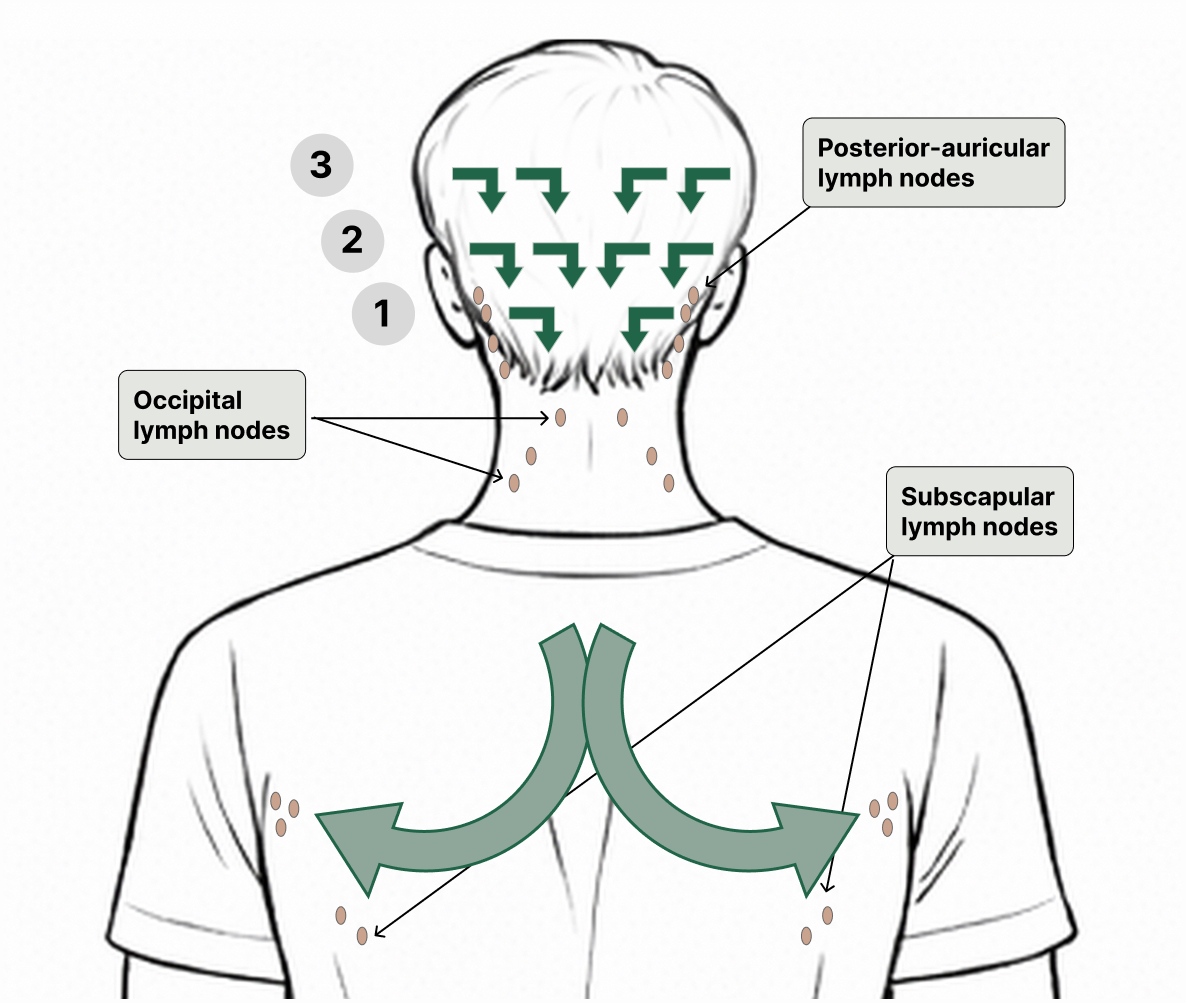
- Work systematically, beginning at the lower hairline and moving upward in rows, following the numbered sequence shown in the diagram
- After completing each row, stroke down across the central shoulder blades toward the underarm
- Repeat each row three times before moving to the next